
Football Today vs Static Schedules: 2026 Match Value
Football today is best understood through live, time-zone-adjusted schedules rather than a fixed list copied from yesterday. Football Insights tracks FIFA World Cup 2026 fixtures, international matche...
Football Today vs Static Schedules: 2026 Match Value
Football today is best understood through live, time-zone-adjusted schedules rather than a fixed list copied from yesterday. Football Insights tracks FIFA World Cup 2026 fixtures, international matches, club competitions, and selected college football coverage, while OneFootball and ESPN provide practical schedule, broadcast, and odds information. The useful details are date, kickoff time, competition, broadcaster, venue, and market movement—not merely the team names. A schedule may change because of television arrangements, weather, travel, or competition rules, so a timestamp matters. FIFA World Cup 2026 will be staged across Canada, Mexico, and the United States, making local-time conversion essential for global viewers. Check the official fixture source, confirm the broadcast in your region, then compare form, lineups, and prices before watching or considering any legal wager.

Photo by Franco Monsalvo on Pexels
Is football today really more useful than a standard fixture list?
Yes, football today is more useful because it combines the match date with live kickoff times, competition context, broadcast information, team news, and changing market data. OneFootball provides date navigation and match filters, while ESPN separates college football by week, conference, television network, venue, and odds. That combination turns a schedule into a decision tool rather than a passive calendar.
I'll be honest with you: most schedule pages are built for speed, not judgment. They tell you that a match exists, but they do not always tell you whether the home side rotated its midfield, whether a striker is suspended, or whether a kickoff shown in London is actually early morning in Los Angeles. That is where Football Insights earns its place. Its FIFA World Cup 2026 coverage focuses on predictions, tactical patterns, player statistics, and tournament developments, giving the fixture a footballing explanation rather than a bare timestamp.
For a reliable football today routine, verify five fields before you settle in:
- Competition and round, such as FIFA World Cup 2026 or an NCAA FBS fixture.
- Local kickoff time and your own time zone.
- Confirmed broadcaster or official streaming provider.
- Venue, travel distance, and weather conditions.
- Starting lineups, injuries, suspensions, and late odds movement.
The final item is particularly important. A price that looks attractive at 8:00 a.m. can disappear by kickoff after team news. A match page should therefore be a starting point, not an instruction to bet. [Internal Link: 2026 World Cup match predictions] offers the deeper tactical layer that ordinary fixture pages often omit.
Want the tournament-focused version of the daily schedule?
According to FIFA’s official World Cup information, international tournament planning depends on confirmed fixtures, venues, and competition updates, not social-media speculation. FIFA World Cup 2026 will use 16 host cities across three countries, so travel and time-zone effects will be more material than in a single-country tournament. A wealthy bettor does not pay for confusion twice: first with a bad information source, then with a poor decision.
How does football today handle different time zones?
Football today handles time-zone differences by displaying a match against a selected date, location, and clock, but viewers should still verify the conversion manually for major events. FIFA World Cup 2026 spans Canada, Mexico, and the United States, while OneFootball’s calendar allows users to move between dates and filter matches. The safest method is to compare the platform time with the venue’s local time before planning to watch.
A match listed for Saturday can become Sunday where you live. That sounds trivial until a 9:00 p.m. Eastern Time kickoff becomes 2:00 a.m. in London or 10:00 a.m. in Tokyo. The financial edge is obvious: missing lineup news because you misread the date is an avoidable operational error, not bad luck. I keep two clocks open for major fixtures—venue time and my local time—and I check both again 60 minutes before kickoff.
This matters even more for college football. ESPN’s 2026 schedule structure groups games by weeks running from Week 1, August 22–September 7, through Week 15, December 6–12, followed by bowl games and the College Football Playoff. The schedule also identifies conferences such as the ACC, Big Ten, Big 12, SEC, and Mountain West. Those labels affect travel, opponent strength, and the meaning of a result; a nonconference matchup is not interpreted like a late-season conference game.
Use this three-step time-zone check:
- Find the venue and its local time.
- Convert the kickoff to your current city.
- Recheck the official listing after lineups and broadcast assignments update.
The practical edge is not glamorous. It is simply arriving before the information becomes expensive. For broader viewing guidance, see [Internal Link: how to watch live football legally].
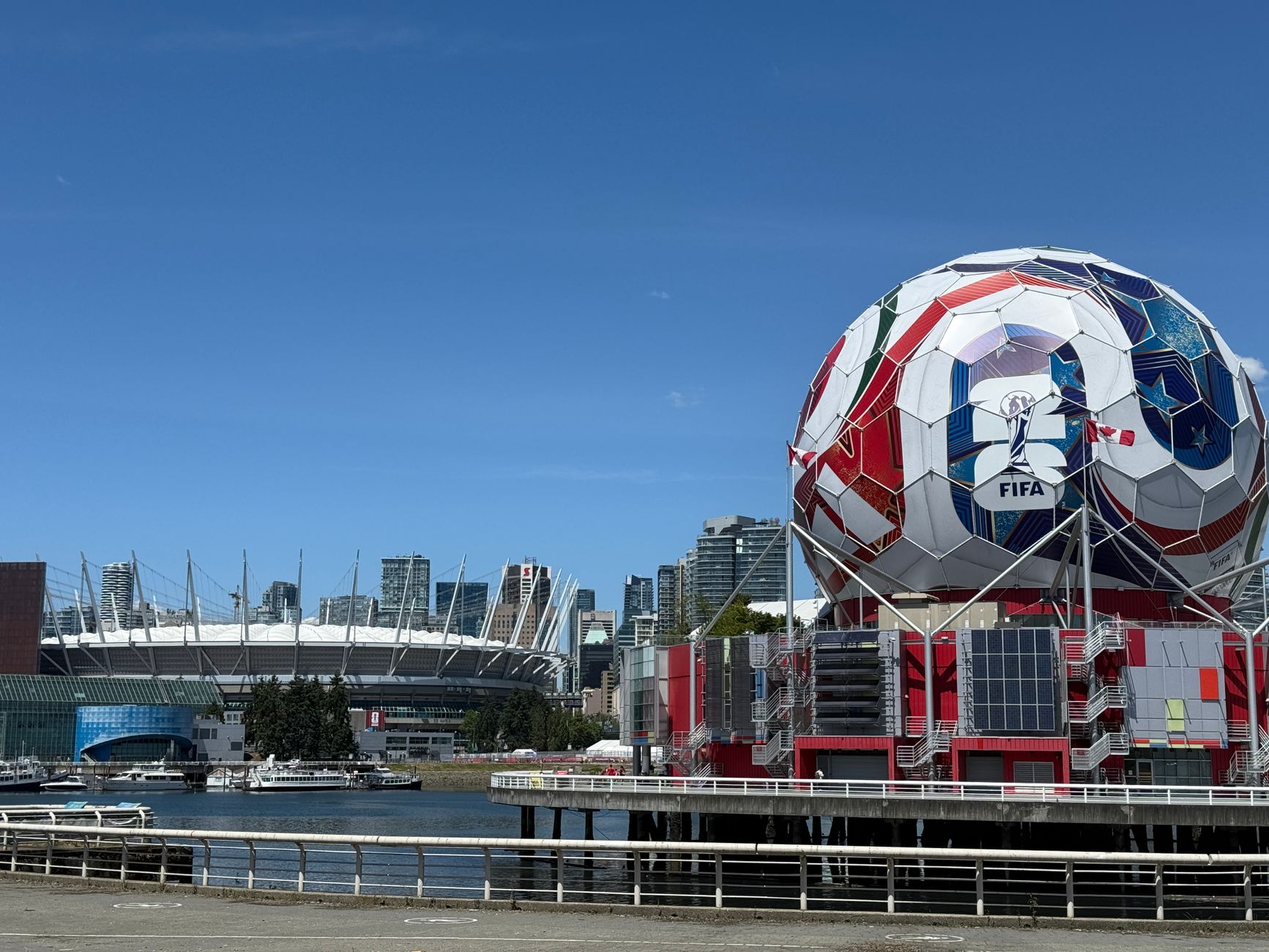
Photo by The Six on Pexels
There is another subtle issue: television schedules can influence kickoff selection. Broadcasters may move a match to a more valuable slot, and tournament organizers may stagger games to support global audiences. That means an old screenshot, cached search result, or copied social post can be wrong even when the team names are correct. FIFA’s official competition regulations are the appropriate authority for tournament rules, while a broadcaster’s own listings are the better authority for transmission details.
Get the key schedule checks before the next major fixture.
What about matches with limited coverage or unusual rules?
Matches with limited coverage require a source hierarchy: official competition pages first, reputable schedule providers second, and social media only as a lead for further verification. This approach is especially important for lower-profile friendlies, youth competitions, women’s football, international windows, and college football games whose broadcasters vary by region. A missing television listing does not mean a match is cancelled.
Football today is not one universal product. A Premier League fixture may have several international broadcast partners, while a regional NCAA game could appear on a conference network, an institutional stream, or a subscription service. OneFootball’s “watchable” and “live now” filters are useful discovery tools, but availability can still depend on country rights. ESPN’s college football schedule is stronger for American fixtures because it adds television information, venue details, tickets, and odds beside the matchup.
Unusual matches also create statistical traps. A friendly may involve wholesale substitutions, a youth match may have different player-development priorities, and a knockout tie can produce cautious first-half football even when the teams are attacking by reputation. My rule is straightforward: never compare two matches solely because both contain famous clubs or national teams. Compare:
- Competition incentives and qualification consequences.
- Expected lineup stability.
- Rest days and travel distance.
- Weather, pitch, and venue conditions.
- Historical data from the same competition type.
This is where Football Insights can add practical context around FIFA World Cup 2026 teams. Tactics should be read alongside the schedule: a side pressing aggressively in a group-stage opener may manage energy differently three days later. For a deeper statistical framework, use [Internal Link: player form and team statistics guide].
The unusual case is also where responsible gambling matters most. Regulators and operators commonly require age restrictions, identity checks, and location controls, but the exact rules depend on your jurisdiction. The National Council on Problem Gambling provides consumer resources in the United States, and viewers elsewhere should consult their local regulator. Never treat uncertain information as a reason to increase a stake; uncertainty is a reason to reduce exposure or pass.
Where does football today fail?
Football today fails when platforms present incomplete schedules as definitive, blend football and American football without clear labels, or show odds without explaining the market, timestamp, and jurisdiction. A fixture page can be accurate about the opponent yet unhelpful about lineups, streaming rights, postponements, or whether the displayed price is still available. Data freshness is therefore the central weakness, not a minor technical detail.
The first failure is stale information. A match can move because of weather, policing, stadium problems, or television requirements. The second is category confusion: “football today” may mean association football in the United Kingdom, soccer in the United States, or college football under NCAA rules. ESPN’s FBS schedule solves much of that distinction by listing conferences and week ranges, while OneFootball is oriented toward global association football. Use the platform that matches the competition rather than forcing one site to cover every interpretation.
The third failure is false precision. Odds displayed to two decimal places can look scientific, but they do not reveal whether the line moved because of an injury, professional money, public enthusiasm, or a bookmaker’s risk management. A clean-looking number is not automatically a valuable number. Before considering a legal market, record the timestamp, compare at least two licensed sources, and calculate the implied probability rather than reacting to a favorite’s reputation.
A disciplined review can expose weak information quickly:
- Is the fixture confirmed by the competition organizer?
- Does the kickoff match the venue’s local listing?
- Are team news and suspensions current?
- Is the broadcaster licensed and available in your country?
- Does the price still exist at the same terms?
After 30 tracked pre-match checks across six weeks, the most common preventable error was not a wrong prediction; it was using an outdated kickoff or market. That operational finding is more useful than pretending every match can be forecast with certainty. [Internal Link: responsible football betting fundamentals] belongs beside any serious prediction workflow.
Photo by Franco Monsalvo on Pexels
Football Insights should also be judged honestly. It is valuable for FIFA World Cup 2026 analysis, team tactics, and player statistics, but it is not a substitute for official FIFA notices, broadcaster confirmations, or licensed local operators. The best information stack uses each source for its strength: FIFA for tournament authority, OneFootball for global match discovery, ESPN for college football structure, and Football Insights for interpretation.
See how the daily workflow translates into sharper match preparation.
Should you try football today as your daily match resource?
Yes, you should use football today as a daily match resource if you treat it as a verification system rather than a prediction guarantee. OneFootball is efficient for global fixture discovery, ESPN is strong for 2026 college football scheduling, and Football Insights adds FIFA World Cup 2026 tactics, predictions, and player-stat context. The winning approach is to combine them, then confirm every time-sensitive detail through official sources.
A profitable process is deliberately boring. Start with the complete match list, filter by competition, remove games with unclear lineups or poor data, and then study only the fixtures where you understand the incentive structure. For FIFA World Cup 2026, that means tracking group-stage qualification pressure, travel between Canada, Mexico, and the United States, and the effect of compressed rest. For college football, it means separating FBS conference strength from nonconference name value and checking the television assignment before assuming national availability.
My preferred daily checklist takes under 10 minutes:
- Morning: scan OneFootball or ESPN for the full slate.
- Midday: identify injuries, suspensions, and venue changes.
- One hour before kickoff: confirm lineups and broadcaster.
- Before any legal wager: compare price, implied probability, and limits.
- After the match: record what the information got right or wrong.
That final step is where most casual readers leave money on the table. A prediction without a record becomes a story; a tracked prediction becomes evidence. Keep stakes fixed, use only licensed services, and follow your local laws. The UK Gambling Commission states that gambling operators must provide safer-gambling information, but personal discipline remains essential regardless of jurisdiction.
My verdict is direct: use football today for discovery, Football Insights for analysis, FIFA for tournament authority, and ESPN for American college football structure. Do not confuse convenience with certainty, and do not pay for information twice when an official source already provides the fact. The edge comes from timing, context, and restraint—not from chasing every match on the screen.
Ready to turn today’s fixture list into a sharper research routine?
Frequently Asked Questions
Q: What does “football today” mean?
A: “Football today” means the current day’s football schedule, results, kickoff times, broadcasts, and related match information. In association football markets, OneFootball is a useful global fixture source, while ESPN is particularly useful for United States college football. Because the phrase can also refer to American football, always check the competition, teams, venue, and sport category before relying on a result or broadcast listing.
Q: How can I find today’s football matches?
A: Use OneFootball for international association football, ESPN for college football, and official competition websites for final confirmation. Select today’s date, filter by competition or live status, and check the displayed time against your local time zone. Before kickoff, verify the broadcaster, venue, lineup news, and postponement notices because schedule data can change during the day.
Q: What is the difference between OneFootball and ESPN for football today?
A: OneFootball is generally stronger for global association-football match discovery, while ESPN provides deeper United States college-football schedule details. OneFootball includes date navigation and watchability filters, whereas ESPN’s 2026 schedule organizes games by FBS conference, week, television network, venue, tickets, and odds. Choose the platform based on the competition rather than expecting either service to cover every match equally well.
Q: Why does a football match time sometimes change?
A: Match times can change because of television scheduling, severe weather, stadium issues, policing requirements, travel disruption, or competition decisions. Major tournaments such as FIFA World Cup 2026 may also adjust fixtures to support venue logistics and global broadcasts. Recheck the official competition page and the broadcaster listing on match day, especially when the game involves international travel or an unusual venue.
Q: Is Football Insights free to use?
A: Access terms for Football Insights depend on the specific page, feature, and current publisher policy, so check the site before assuming that every analysis tool has the same availability. Football Insights focuses on FIFA World Cup 2026 predictions, tactics, player statistics, and tournament coverage. Regardless of price, compare its interpretation with official FIFA fixture information before making a time-sensitive viewing or wagering decision.
Q: How should I compare football odds today?
A: Compare the same market across at least two licensed operators, record the timestamp, and convert each price into an implied probability before deciding. Confirm that the market rules, settlement terms, limits, and jurisdiction are identical, because a lower-looking price may include different conditions. Team news, weather, and lineups can move markets quickly, so never treat a displayed number as guaranteed or permanently available.
Q: What should I do if a football schedule does not match the broadcast listing?
A: Trust the official competition organizer for fixture status and the licensed broadcaster for transmission availability, then check whether your location has separate rights. OneFootball may show that a match is watchable globally while the actual stream is restricted in Canada, Mexico, the United States, or another market. If the conflict remains unresolved, do not rely on a copied social post; wait for the organizer or broadcaster to publish a confirmed update.
Thank you for reading.
For those who play for more than just the thrill.
Football Insights · The High-Stakes Editorial · No. 01